Tuesday, January 22, 2019

A Game of Numbers: Robert E. Lee's Assumptions about the Federal Garrisons in the Shenandoah Valley

     Standing and fighting at Sharpsburg. Pickett's Charge. Each of these decisions could rightfully be labeled as Robert E. Lee's greatest mistake during his Civil War career. But one that often flies under the radar is the decision Lee made earlier in the Maryland Campaign to divide his army and send a large portion of it into the Shenandoah Valley to subdue the Federal garrisons positioned in Martinsburg and Harpers Ferry. A bold plan to be sure, this plan alone was not the undoing of Lee's campaign. Instead, it was the assumptions he made about how quickly his soldiers could open the Confederate supply line in the Shenandoah Valley.
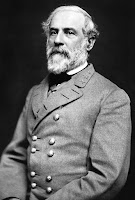
Robert E. Lee
     Robert E. Lee was aware of the Union garrisons in the Valley before his men set foot on Maryland soil. But his crossings near Leesburg armed him with the belief that his intervention between those garrisons and Washington City and Baltimore would force the evacuations of Martinsburg and Harpers Ferry. It did not. Before Lee could advance his army farther north into Pennsylvania, he had to deal with the enemy in his rear to open the Valley as a supply route and, if needed, route of retreat back to Virginia.
     On the evening of September 9, 1862, staff officers and couriers emanated from Lee's headquarters outside of Frederick. The riders delivered multiple copies of Special Orders No. 191 to Lee's subordinates. The orders outlined the division of the Army of Northern Virginia into multiple pieces, three of which, led by Stonewall Jackson, Lafayette McLaws, and John Walker, would take different routes to intercept, destroy, or capture the enemy garrisons at Martinsburg and Harpers Ferry. When the orders went into effect the next day, Lee anticipated that these three wings would wrap up the operations in the Valley quickly--perhaps as early as September 12--before the army reunited and continued on its trek north.
Sunday, January 13, 2019

John Pope's Take on Joseph Mansfield

     John Pope's personality is often viewed negatively by historians. Quotes from Pope haters can be easily found and are often repeated in Civil War historiography. Sometimes, it reaches the point where one wonders if anyone could have gotten along with him or vice versa.
     Pope's Military Memoirs, edited by Peter Cozzens and Robert I. Girardi, offer an eye-opening look into this divisive general. One quote in particular though caught my attention. It was Pope's description of Joseph Mansfield and his personality, looks, and bravery. Quotes like this are revealing, especially when Pope ties Mansfield's personality traits to his fate at Antietam. The two served together in Mexico, Mansfield as Pope's superior officer. "Pope took to Mansfield at once," wrote Pope's biographer Peter Cozzens. It appears Pope's favorable view of Mansfield remained until his dying day.
Joseph K. F. Mansfield
General Mansfield was of middle height and robust figure. He had a broad and rather ruddy face, with a thick shock of white hair and beard. He was a man of kindly disposition and very just; but, as I have said before, he was rather fussy and fond of meddling with his subordinates, so that, although all of his officers exulted in his behavior in battle and were immensely proud of him for some time after the battle was over, he soon reduced them to their old feeling that he tormented and persecuted them unwarrantably. He was still a comparatively young man when he was killed at Antietam, but I think it may be said of him that his complete recklessness and his apparently irresistible inclination to seek the most exposed and most dangerous places on a field of battle, of necessity deprived him of the power to use his great military abilities and acquirements to the best advantage for the army or the government. He was a gallant soldier and a true and loyal man and will always be remembered with pride and respect by those who knew him in those old days.

Friday, November 30, 2018

"A sort of clown": The Appearances of Lee, Longstreet, and Jackson in the Wake of the Maryland Campaign

     In times of war, nation's looks to their heroes. Few heroes ranked as high in the eyes of the Confederate citizenry in the fall of 1862 than Generals Robert E. Lee, James Longstreet, and "Stonewall" Jackson. They carried the war successfully from the gates of Richmond to Abraham Lincoln's doorstep and beyond the Potomac. Southerners yearned for news of the three men and tried to picture their heroes in an age before personal portraits were universally circulated.
     The war correspondent of the Columbus (GA) Times penned the following descriptions of what Lee, Longstreet, and Jackson looked like following their campaign into Maryland. It was reprinted in numerous papers, but this article has been pulled from the November 4, 1862 issue of the Staunton Spectator (VA).

     General Lee has, I believe, won his way to everybody's confidence. In appearance he is tall, portly and commanding. His dress is usually a plain Brigadier's uniform, a black felt hat, with the brim turned down, and he wears a short grizzled beard all round his face. He has much of the Washingtonian dignity about him, and is much respected by all with whom he is thrown. At Sharpsburg I saw him on the field during the heat of the action. He was surrounded by his staff and a perfect squadron of couriers. He was engaged in calmly viewing the storm of battle, and giving orders in a manner of cool reliance. Aids and couriers were hurrying to and from the right, left and centre, and the whole disposition of forces seemed under his perfect control.


     General Longstreet is stout and fleshy, and of good height, and has a quiet courageous look. He seems full of thought and of decision, and his face makes an agreeable impression alike on new and old acquaintances. He is characteristically a fighting man--none can equal him in forcing a strong and well fortified position, and General Lee showed his appreciation of an old tried soldier, when he patted him on the shoulder after the late battle and said, "My old war horse!" In this engagement he was second in command of the army, and his old corps keenly felt the need of his able handling.


     I was surprised at Stonewall Jackson's appearance. He has been described as a sort of clown. I never yet saw him riding with his knees drawn up like a monkey, and his head resting upon his breast. He has a first rate face, and seems a plainly dressed Captain of Cavalry, with an unpretending Staff. His uniform is fine enough, certainly, for the hard life he leads. But the imagination, is piqued, you know, by the absence of pretension, as "a King in grey clothes." Stonewall can't like to come about the army much. The boys keep him bareheaded all the time. When they begin to cheer him he usually pulls off his hat, spurs his fine horse, and runs through, greeted with cheers every step for five miles.